Short Answer
Short Answer
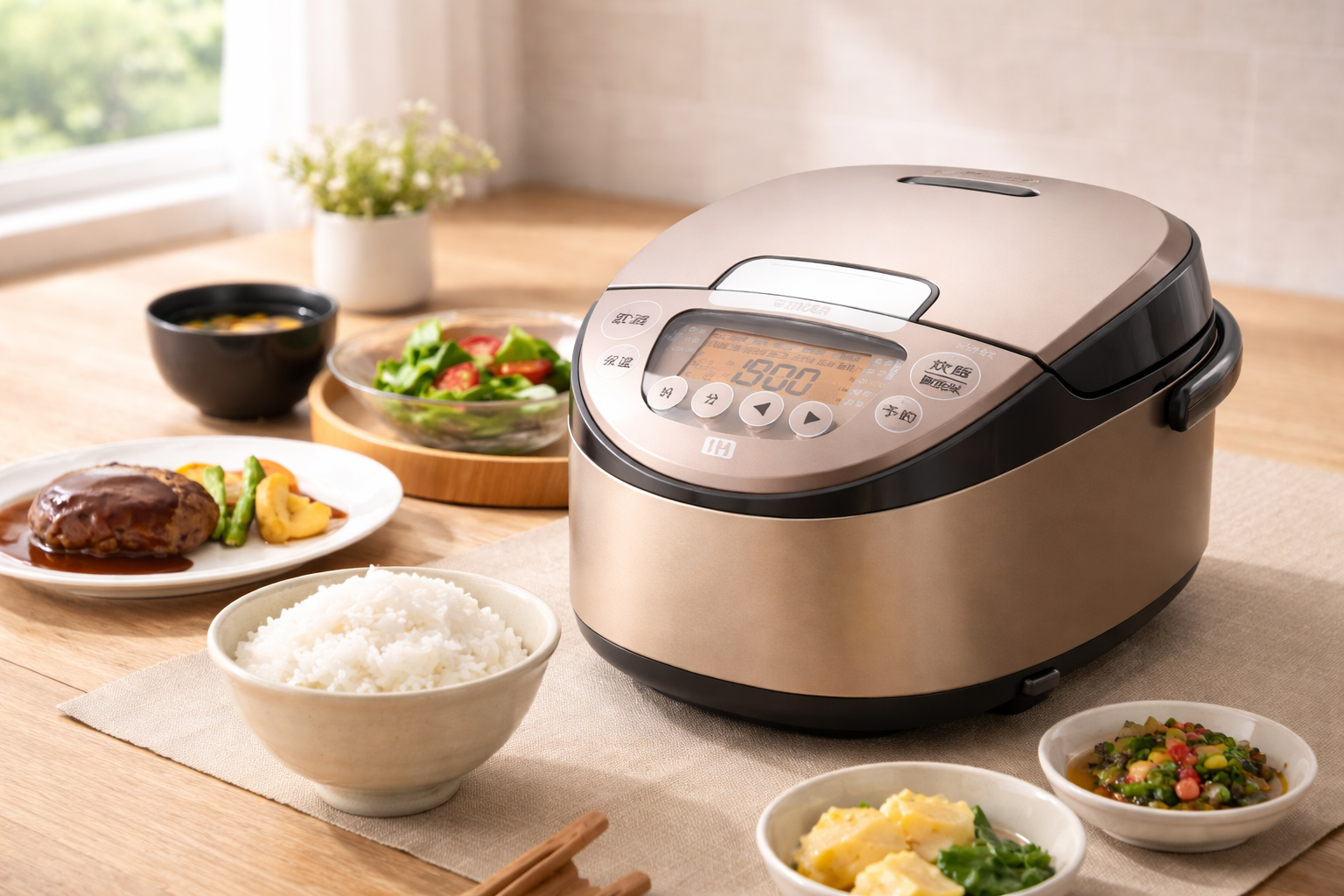
The Tiger JBV-A10U is a practical 5.5-cup Micom rice cooker for buyers who want a Japanese-brand rice cooker at a lower price than many Zojirushi models.
It is not a premium IH or Pressure IH rice cooker, but it can make sense for simple daily rice cooking, small families, and budget-focused buyers.
Its main appeal is value. Choose the JBV-A10U if you want a straightforward rice cooker for everyday meals and do not need advanced texture control.
Check the current price and availability before deciding.
→ Tiger JBV-A10U
Overview
The Tiger JBV-A10U is a 5.5-cup Micom rice cooker for buyers who want a practical Japanese-brand rice cooker at a lower price.
It is not designed to compete with IH or Pressure IH models. Instead, it focuses on simple daily rice cooking, useful capacity, and good value for households that do not need premium texture control.
One feature that separates it from many basic rice cookers is Tiger’s Tacook system. This allows a small side dish to be cooked in the upper tray while rice cooks below, which can be useful for simple meal preparation.
The 5.5-cup capacity also makes it practical for couples, small families, and regular home cooking. It gives more flexibility than a compact 3-cup model without being as large as a 10-cup rice cooker.
Overall, the JBV-A10U is best understood as a value-focused Micom rice cooker. It makes sense if you want a straightforward Japanese-brand model for everyday rice and do not want to pay Zojirushi prices.
Key Features
Tacook Cooking System
The Tiger JBV-A10U includes Tiger’s Tacook cooking system, which lets you cook rice and a simple side dish at the same time.
A cooking plate can be placed above the rice while steam from the cooking process heats the food in the tray. This can be useful for simple meals, especially if you want to prepare rice and a small side dish without using another appliance.
Key takeaway:
Tacook is the main feature that separates the JBV-A10U from many basic Micom rice cookers.
5.5-Cup Capacity
The JBV-A10U has a 5.5-cup capacity, which is one of the most practical sizes for everyday home use.
It works well for couples, small families, and households that cook rice several times a week. It gives more flexibility than a compact 3-cup model without taking as much space as a 10-cup rice cooker.
Key takeaway:
The 5.5-cup size makes the JBV-A10U practical for daily meals and small households.
Micom Cooking Control
The JBV-A10U is a Micom rice cooker.
Micom models use computerized temperature and timing control during the cooking process. They are not as advanced as IH or Pressure IH models, but they are usually easier to justify for buyers who want reliable everyday rice at a lower price.
Key takeaway:
Micom cooking is enough for many households that want simple, dependable rice without paying for premium heating technology.
Automatic Keep Warm
The JBV-A10U includes an automatic keep warm function.
This is useful if people in your household eat at different times. However, rice is still best soon after cooking, so keep warm should be seen as a convenience feature rather than the main reason to buy this model.
Key takeaway:
The keep warm function is practical for daily routines, but the main value of this model is affordable everyday rice cooking.
Delay Timer
The delay timer lets you schedule rice cooking in advance.
This can be useful for breakfast, dinner preparation, or busy weekdays when you want rice ready at a specific time.
Key takeaway:
The delay timer adds convenience for regular home use.
Cooking Performance
Rice Texture
The Tiger JBV-A10U can produce reliable everyday rice for a Micom rice cooker in this price range.
It is best suited for standard white rice, brown rice, and simple daily meals. It does not offer the same texture control as IH or Pressure IH models, but it is practical for buyers who want dependable rice without paying more for premium heating technology.
Key takeaway:
The JBV-A10U is good for everyday rice, but it is not designed for premium rice texture control.
Temperature Control
The JBV-A10U uses Micom cooking control to manage temperature and timing during the cooking cycle.
This gives it more control than a very basic one-button rice cooker. However, because it is not an IH model, heat distribution is still less advanced than higher-priced Japanese rice cookers.
Key takeaway:
Micom control is useful for daily rice cooking, but IH models offer stronger heating performance.
Consistency Across Rice Types
The JBV-A10U includes cooking programs for common rice types such as white rice, brown rice, mixed rice, and porridge.
This makes it useful for households that cook different types of rice, but results still depend on rice type, water level, and washing method.
Key takeaway:
The JBV-A10U is versatile enough for common rice types, especially for buyers who want a simple daily-use cooker.
Cooking Time
Cooking time is typical for a Micom rice cooker.
It may not be the fastest option, but the cooking cycle is designed to manage soaking, heating, and steaming stages for better rice than very basic cookers.
Key takeaway:
Choose this model for practical daily rice cooking, not for the fastest possible cooking time.
Keep Warm Quality
The JBV-A10U includes a keep warm function for daily convenience.
This is helpful if rice is cooked before the meal or if people eat at different times. However, rice is still best soon after cooking, and long keep-warm periods may reduce texture quality.
Key takeaway:
The keep warm function is useful, but this model is best for rice eaten within a reasonable time after cooking.
Pros and Cons
Pros
- Practical 5.5-cup capacity for daily home use
- Lower-cost Japanese-brand rice cooker option
- Tacook system allows simple rice-and-side-dish cooking
- Micom cooking control is enough for many everyday meals
- Useful for white rice, brown rice, mixed rice, and porridge
- Good option for budget-focused buyers
- Easier to justify than higher-priced IH or Pressure IH models
Cons
- No IH heating system
- No Pressure IH cooking
- Rice texture control is not as advanced as higher-end models
- Not the best choice for buyers who care strongly about rice texture
- Tacook tray capacity is limited
- Cooking time may feel slower than very simple rice cookers
Key takeaway:
The Tiger JBV-A10U is a practical value choice if you want a Japanese-brand Micom rice cooker at a lower price. It is not the right model if you want IH heating, Pressure IH, or premium rice texture control.
Who Should Buy It
The Tiger JBV-A10U is best for buyers who want a practical Japanese-brand Micom rice cooker at a lower price.
It is not a premium model, but it makes sense for households that want simple daily rice cooking, useful 5.5-cup capacity, and Tiger’s Tacook cooking system.
Budget-Focused Buyers
This model is a good fit if you want a Japanese-brand rice cooker without paying Zojirushi prices.
It gives you practical Micom cooking for everyday meals while avoiding the higher cost of IH or Pressure IH models.
Small Families and Couples
The 5.5-cup capacity works well for couples, small families, and households that cook rice several times a week.
It is large enough for regular home meals without being as bulky as a 10-cup rice cooker.
Buyers Who Want Simple Daily Rice
The JBV-A10U is best for people who want reliable rice for normal meals.
It is not designed for advanced texture control, but it is practical if you mainly cook white rice, brown rice, mixed rice, or porridge.
Buyers Interested in Tacook
The Tacook system is useful if you want to cook rice and a simple side dish at the same time.
This can help with quick meals, especially for busy households that want to reduce extra cooking steps.
Key takeaway:
Buy the Tiger JBV-A10U if you want a lower-cost Japanese-brand Micom rice cooker for simple daily meals. Choose a higher-end model if rice texture control is your top priority..
Who Shouldn’t Buy It
The Tiger JBV-A10U is not the right choice for every buyer.
It is a practical Micom rice cooker, but it is not designed for people who want advanced heating technology or premium rice texture control.
Buyers Who Want IH Heating
The JBV-A10U does not use induction heating.
If you want more even heating and better texture consistency, a standard IH model such as the Zojirushi NP-HCC10 may be a better upgrade.
Buyers Who Want Pressure IH
The JBV-A10U is not a Pressure IH rice cooker.
If rice texture is one of your top priorities, a Pressure IH model such as the Zojirushi NW-YNC10 may be worth comparing.
Buyers Who Care Strongly About Rice Texture
This model is best for simple daily rice cooking.
If you are very sensitive to rice texture, moisture, firmness, or consistency, a higher-end Zojirushi model may be a better fit.
Buyers Who Do Not Need Tacook
The Tacook system is one of the main reasons to consider this model.
If you only want the best possible rice texture and do not care about cooking a side dish at the same time, the JBV-A10U may not be the strongest choice.
Key takeaway:
Do not choose the Tiger JBV-A10U if you want IH heating, Pressure IH, or premium rice texture control. Choose it if you want a lower-cost Japanese-brand Micom rice cooker for simple daily meals.
Final Verdict
The Tiger JBV-A10U is a practical 5.5-cup Micom rice cooker for buyers who want a Japanese-brand rice cooker at a lower price.
It is not an IH or Pressure IH model, so it is not the best choice for buyers who care strongly about premium rice texture control. However, it makes sense for simple daily rice cooking, small families, and budget-focused buyers.
The main reason to choose the JBV-A10U is value. It gives you a useful 5.5-cup capacity, Micom cooking, and Tiger’s Tacook system without moving into a higher price range.
If you want a straightforward Japanese-brand rice cooker for everyday meals, the JBV-A10U is worth comparing.
Check the current price and availability before deciding.
→ Tiger JBV-A10U
Related Articles
If you want a broader budget-focused list, read our guide to the best Japanese rice cookers under 250 dollars.
If you want to compare value models with stronger Zojirushi options, read our best 5.5-cup Japanese rice cookers guide.
If you want a more balanced daily-use recommendation, read our best Japanese rice cooker for daily use guide.
If you are deciding whether Micom is enough, read our Micom vs IH vs Pressure IH rice cooker guide.
If you want a full review of a budget-friendly Zojirushi option, read our Zojirushi NS-TSC10 review.