- Short Answer
- Why Rice Cooker Prices Vary So Much
- What You Usually Get With a Cheap Rice Cooker
- What You Usually Get With an Expensive Rice Cooker
- The Biggest Difference: Rice Texture and Consistency
- Micom vs IH vs Pressure IH: Why Technology Matters
- When a Cheap Rice Cooker Is Enough
- When an Expensive Rice Cooker May Be Worth It
- Cheap vs Expensive Rice Cooker Comparison
- Should You Spend More on a Japanese Rice Cooker?
- Real Examples of Price Differences
- Related Guides to Help You Choose
- Final Thoughts
Short Answer
The main difference between a cheap and expensive rice cooker is consistency. Cheap rice cookers can be enough if you only cook basic rice sometimes. Expensive rice cookers usually improve texture control, heating, keep-warm quality, and convenience. The best choice depends on how often you eat rice and how much rice texture matters to you.
If you want a realistic balance between price and quality, our guide to the best Japanese rice cookers under $250 is a good place to compare practical options.
Why Rice Cooker Prices Vary So Much
Rice cooker prices vary because not all rice cookers cook rice in the same way.
Some models use simple heating. Others use more advanced heating systems, sensors, and cooking programs. Higher-priced models may also have better inner pots, better temperature control, and more convenient settings.
This does not mean every expensive rice cooker is automatically better for every person. It means the price often reflects how much control the cooker has over heat, timing, texture, and daily usability.
What You Usually Get With a Cheap Rice Cooker
Basic cooking
A cheap rice cooker usually focuses on one main job: cooking rice.
For simple white rice, this may be enough. If you do not need many settings or texture options, a basic rice cooker can still be useful.
Cheap does not automatically mean bad. It often means simple.
Simple controls
Most cheap rice cookers have simple buttons or very limited menu options.
This can be a good thing if you want something easy to use. You may not need to think about rice type, texture, or advanced programs.
The trade-off is that you usually have less control over the final result.
Lower price
The biggest advantage of a cheap rice cooker is the price.
It is easier to buy, especially if you are trying a rice cooker for the first time. It can also make sense if rice is not a major part of your daily meals.
For occasional use, spending less can be a practical choice.
Fewer texture adjustments
Cheap rice cookers usually have fewer ways to adjust rice texture.
You may not be able to choose softer, firmer, sweeter, or more separated rice. The cooker may simply cook rice in one standard way.
This is fine for many people. But if you care about small texture differences, you may notice the limits over time.
What You Usually Get With an Expensive Rice Cooker
Better heating control
Expensive rice cookers often have better heat control.
This matters because rice cooks best when heat is managed carefully. Better control can help the rice cook more evenly from the surface to the center.
In daily use, this can make the result feel more stable.
More consistent rice texture
A more expensive rice cooker usually focuses more on consistency.
The goal is not only to cook rice, but to cook it evenly each time. This can help reduce problems such as rice being too wet, too dry, too soft, or unevenly cooked.
This difference matters more if you eat rice often.
More cooking programs
Higher-priced rice cookers often include more programs.
These may include settings for white rice, brown rice, mixed rice, sushi rice, porridge, quick cooking, or other types of rice.
These programs are useful if you cook more than one kind of rice. If you only cook basic white rice, you may not need many of them.
Better keep-warm performance
Keep-warm quality is one of the practical differences many people notice.
A basic rice cooker may keep rice warm, but the texture can become dry or less pleasant after some time. More expensive rice cookers often focus more on keeping rice warm without ruining the texture too quickly.
This is useful if you cook rice once and eat it later in the day.
Higher build quality
Expensive rice cookers often feel more solid.
The inner pot may be thicker. The lid, body, and controls may feel more durable. The design may also be easier to clean or more comfortable to use every day.
This does not mean a cheaper model cannot last. But higher build quality can matter if you plan to use the rice cooker regularly for years.
The Biggest Difference: Rice Texture and Consistency
The biggest difference between a cheap and expensive rice cooker is not just the number of buttons.
It is usually the rice texture and consistency.
Higher-end models often focus on cooking rice more evenly. They may control heat more carefully, adjust cooking time more precisely, and handle different rice types better.
This matters most if rice is part of your daily meals. If you eat rice only once in a while, the difference may not feel important enough to justify the higher price.
Micom vs IH vs Pressure IH: Why Technology Matters
Rice cooker technology is one major reason prices change.
Micom rice cookers are usually more affordable. They use computerized controls, but the heating system is generally simpler than higher-end models.
IH rice cookers heat more evenly because they use induction heating. This can improve consistency and texture compared with many basic models.
Pressure IH rice cookers are usually more advanced and more expensive. They combine induction heating with pressure cooking to give the cooker more control over texture.
If you want a deeper explanation of cooking technology, see our
Micom vs IH vs Pressure IH guide.
When a Cheap Rice Cooker Is Enough
You eat rice occasionally
If you only eat rice sometimes, a cheap rice cooker may be enough.
You may not need advanced heating, many programs, or premium keep-warm performance. A simple model can handle basic rice without making the purchase feel too expensive.
For occasional use, practicality matters more than advanced features.
You only need basic white rice
If you mainly cook basic white rice, you may not need a high-end model.
Many cheap rice cookers can cook plain rice in a simple way. The result may not be as refined or consistent as a premium model, but it can still be acceptable for everyday simple meals.
The key question is whether you are satisfied with basic rice.
You have a tight budget
If budget is the main concern, a cheaper rice cooker can be a reasonable choice.
It is better to buy a simple model that fits your budget than to overspend on features you may not use.
A cheap rice cooker can still be useful, especially if your expectations are realistic.
You are buying your first rice cooker
A cheaper rice cooker can make sense as a first rice cooker.
It lets you see how often you actually use it. If you later find that rice becomes part of your routine, you can upgrade with a clearer idea of what you want.
This is a practical way to avoid buying too much too soon.
When an Expensive Rice Cooker May Be Worth It
You eat rice almost every day
If you eat rice almost every day, a more expensive rice cooker may be worth considering.
Small improvements in texture, consistency, and keep-warm quality can matter more when you use the cooker often.
The value becomes easier to feel when rice is part of your normal routine.
You care about texture
If you care about rice texture, spending more can make sense.
Higher-end rice cookers often give better control over softness, firmness, and even cooking. This can be important if you want rice that feels closer to restaurant-style or Japanese home-style rice.
It is not about luxury only. It is about getting a result you enjoy more often.
You cook different types of rice
If you cook brown rice, mixed rice, sushi rice, or other rice types, a more advanced rice cooker can be helpful.
Different rice types need different cooking conditions. A rice cooker with more programs can make this easier.
This does not mean every program is necessary. But more flexibility can be useful if your cooking habits are varied.
You want better keep-warm performance
If you often cook rice ahead of time, keep-warm quality matters.
A better rice cooker may keep rice in better condition for longer. This can make daily meals easier, especially for families or people who eat at different times.
If you usually eat rice immediately after cooking, this may matter less.
You want a long-term appliance
If you plan to use a rice cooker for many years, a more expensive model may be easier to justify.
Better build quality, better cooking control, and more useful settings can add value over time.
This is especially true if the rice cooker becomes one of your most-used kitchen appliances.
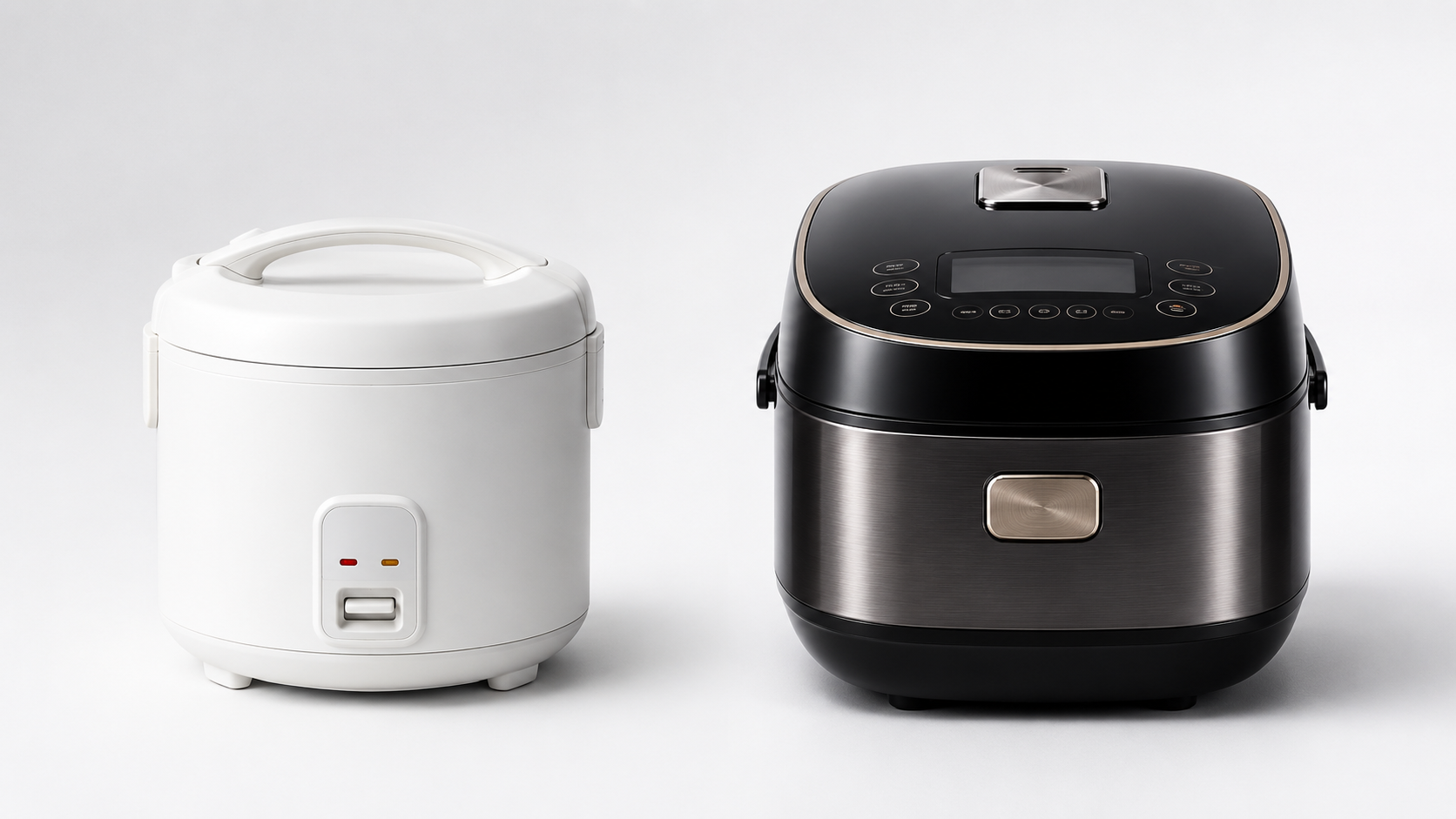
Cheap vs Expensive Rice Cooker Comparison
| Feature | Cheap Rice Cooker | Expensive Rice Cooker |
|---|---|---|
| Best for | Occasional rice, simple meals, first-time buyers | Daily rice, texture-focused users, long-term use |
| Price expectation | Lower upfront cost | Higher upfront cost |
| Rice texture | Basic and acceptable for many users | Usually more controlled and consistent |
| Heating method | Often simple bottom heating or basic Micom-style cooking | Often IH or Pressure IH in higher-end models |
| Programs | Limited settings | More settings for different rice types and cooking styles |
| Keep-warm quality | Basic keep-warm function | Usually better for longer holding time |
| Flexibility | Good for simple white rice | Better for varied rice types and texture preferences |
| Best choice if unsure | Choose this if you eat rice occasionally or want to start simple | Choose this if you eat rice often and care about texture |
Should You Spend More on a Japanese Rice Cooker?
Japanese rice cookers often focus strongly on rice quality, texture, and daily usability.
This is one reason they can cost more than basic rice cookers.
If you want to understand this price difference more deeply, see our
guide to why Japanese rice cookers are expensive.
Many Japanese models are designed for people who eat rice often and care about how the rice feels, not only whether it is cooked.
Spending more can make sense if rice is part of your normal routine. Better heating control, better texture consistency, and better keep-warm performance can become valuable in daily life.
But a basic model may still be enough if you only cook rice occasionally. The right choice depends on your habits, not only the price.
Real Examples of Price Differences
One common reference model is the Zojirushi NS-TSC10. It is often compared as a more affordable Micom-style rice cooker, suitable for people who want a simple Japanese rice cooker with computerized controls.
Another example people compare is the Zojirushi NP-HCC10. This type of model represents the IH category, where heating control is usually more advanced than basic models.
Premium models often include Pressure IH technology. Examples people may compare include the Zojirushi NW-YNC10 or NW-JEC10BA.
These examples are not rankings. They simply show how rice cookers can move from basic Micom-style models to IH models and then to premium Pressure IH models.
Related Guides to Help You Choose
If you are comparing mid-range and premium models, see our
$300 vs $500 rice cooker guide.
If you want a practical buying direction, see our
best Japanese rice cooker for daily use guide.
If you are comparing common Zojirushi options, see our
NS-TSC10 vs NP-HCC10 comparison.
If you are deciding whether spending more is actually worth it for your routine, see our
expensive rice cooker worth it guide.
If you want a deeper explanation of cooking technology, see our
Micom vs IH vs Pressure IH guide.
Final Thoughts
A cheap rice cooker can be enough if you only need simple rice.
An expensive rice cooker may be worth it if you eat rice often, care about texture, want better keep-warm performance, or plan to use it for many years.
The best decision rule is simple: if you eat rice occasionally, a cheap or basic rice cooker may be enough. If you eat rice daily, spending more can make sense.